German Language for Medical Professionals: Why It Matters and Which Level Do You Need?
Healthcare has become increasingly global, and Germany has emerged as one of the top destinations for doctors, nurses, dentists, and other medical professionals seeking better career opportunities. However, medical knowledge alone is not enough to work in Germany. Strong communication with patients, colleagues, and healthcare authorities is essential. This is why learning German is one of the most important steps before starting your medical career there. Understanding the required language level also helps you prepare in the right direction and avoid delays in the licensing process.
Why Is German Important for Medical Professionals?
Germany's healthcare system depends on clear communication. Medical professionals must explain diagnoses, understand patient concerns, discuss treatment plans, and maintain accurate medical records. Even highly skilled professionals may face challenges if they cannot communicate effectively in German.
Apart from patient care, language proficiency is also necessary for interacting with hospital staff, attending medical training, and completing official documentation. Most licensing authorities require proof of German language proficiency before granting permission to practice.
Which German Language Level Do You Need?
The required language level depends on your profession and the state where you plan to work. However, the following levels are generally accepted:
| German Level | Purpose |
|---|---|
| A1–A2 | Basic communication and everyday conversations. |
| B1 | Intermediate understanding but usually not enough for medical practice. |
| B2 | Common minimum requirement for many healthcare professionals and licensing procedures. |
| C1 Medical German | Often required for doctors to pass medical language examinations and communicate confidently in clinical settings. |
Many doctors are expected to clear a medical language examination after achieving B2 or C1 proficiency, depending on local regulations.
Benefits of Learning German Before Moving
Learning German before relocating offers several advantages:
- Better communication with patients.
- Higher confidence during interviews.
- Easier adaptation to hospital environments.
- Improved chances of obtaining medical licensing.
- Greater career growth and professional development.
Language skills also help medical professionals build trust with patients, which is essential for quality healthcare.
How Should Medical Professionals Prepare?
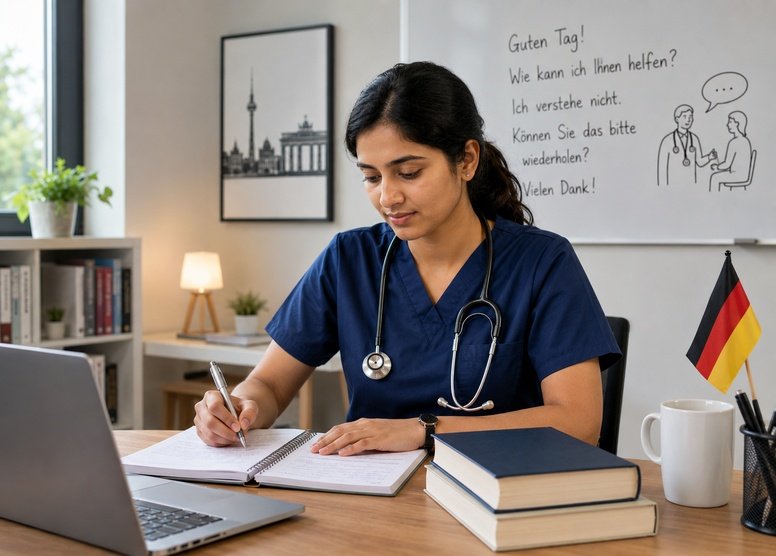
Learning German for healthcare is different from general language learning. Besides grammar and vocabulary, professionals should focus on:
- Medical terminology
- Patient conversations
- Clinical documentation
- Hospital communication
- Listening and speaking practice
- Mock medical language examinations
Regular practice through conversations and case-based learning helps improve fluency much faster than memorizing vocabulary alone.
Common Challenges While Learning Medical German
Many professionals initially find medical terminology and pronunciation difficult. Others struggle with patient conversations because everyday German differs from textbook lessons. The best way to overcome these challenges is through consistent speaking practice, real-life medical scenarios, and guidance from experienced trainers familiar with healthcare communication requirements.
Conclusion
Learning German is an investment that opens doors to a successful healthcare career in Germany. Reaching the required language level not only fulfills licensing requirements but also helps medical professionals communicate confidently, provide better patient care, and adapt smoothly to a new healthcare system.
If you are planning your journey toward a medical career in Germany, VS German Language and Career Institute provides structured German language training designed to help healthcare professionals build strong communication skills and prepare confidently for language proficiency requirements.
Start your German learning journey early, understand the language requirements for your profession, and prepare step by step for a rewarding healthcare career in Germany.